
Francisco Farreras was born in Barcelona on September 7, 1927. After the civil war, in 1940, he moved with his family to Murcia, where he began studying painting under Antonio Gómez Cano. He later continued his training in Santa Cruz de Tenerife with Mariano Cossío. In 1944, he settled in Madrid and enrolled at the School of Fine Arts of San Fernando. He further expanded his artistic education in 1949 by attending a mural painting course taught by Ramón Stolz.
During his early years, he explored a variety of subjects, including urban landscapes and still lifes. Although figurative, his initial work displayed a strong geometric inclination, influenced by certain Cubist aesthetic principles. In 1952, he traveled to Paris; that same year, he was selected for the First Hispano-American Art Biennial in Madrid and held his first solo exhibition at Galería Biosca, where he became acquainted with Informalist painters who would later form the group El Paso.
In 1954, he received a grant from the French Institute that enabled him to return to Paris, where he resided at the Colegio de España. During this period, his painting underwent a process of formal simplification and chromatic restraint, gradually limiting his palette to blacks, whites, and grays. Upon returning to Spain, he completed several large-scale commissions for churches and official institutions, collaborating with Miguel Fisac and José Luis Sánchez. At the same time, his painting evolved toward full abstraction beginning in 1955, a phase he presented in another solo exhibition at Biosca as well as in the First Salon of Abstract Art at the Ibero-American Institute of Valencia.
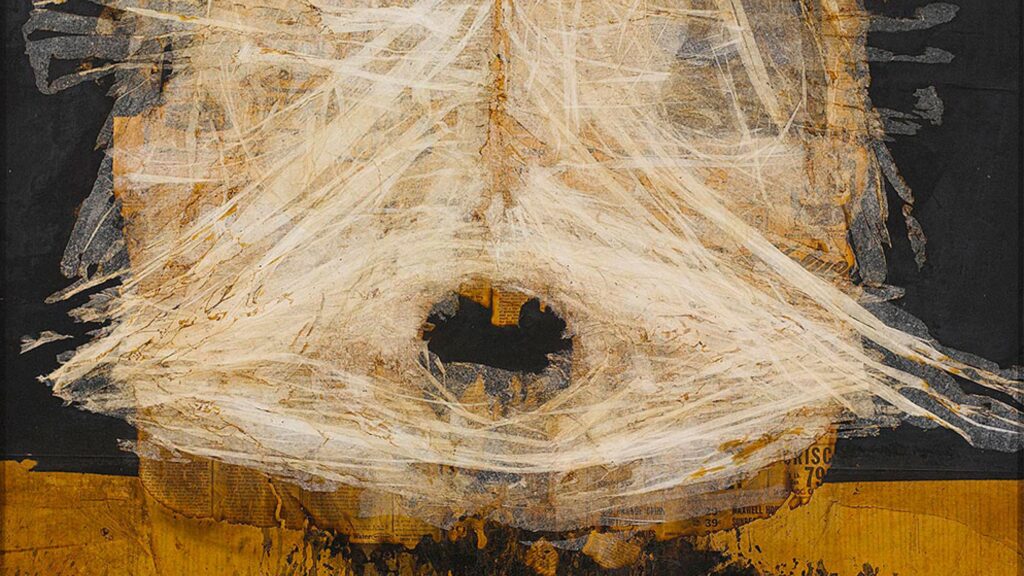
In 1958, he participated in the 29th Venice Biennale, where the Spanish representation received significant international recognition. His work became more materially dense through the use of sand and marble dust. During this experimental process, he discovered the expressive potential of tissue paper, marking the beginning of a new creative stage. He developed a collage technique that combined material density with pictorial effects of glazes and transparencies arising from the interaction between support and paper.
Throughout these years, he took part in traveling exhibitions organized by the Department of Cultural Relations of the Ministry of Foreign Affairs across Europe and the Americas. In 1963, he moved to New York, where he spent two years as artistic director of exhibition installations at the Spanish Trade Center. He returned to Madrid in 1966, although he continued to travel frequently throughout Europe and South America.
In the late 1960s, his palette began to lighten, and he reintroduced figurative elements into his compositions with a marked expressive intent, incorporating fragments of posters and other printed materials. During the 1970s, the scale of his works expanded significantly, a tendency that culminated in the large mural-collage he created in 1982 for Madrid’s Barajas Airport.
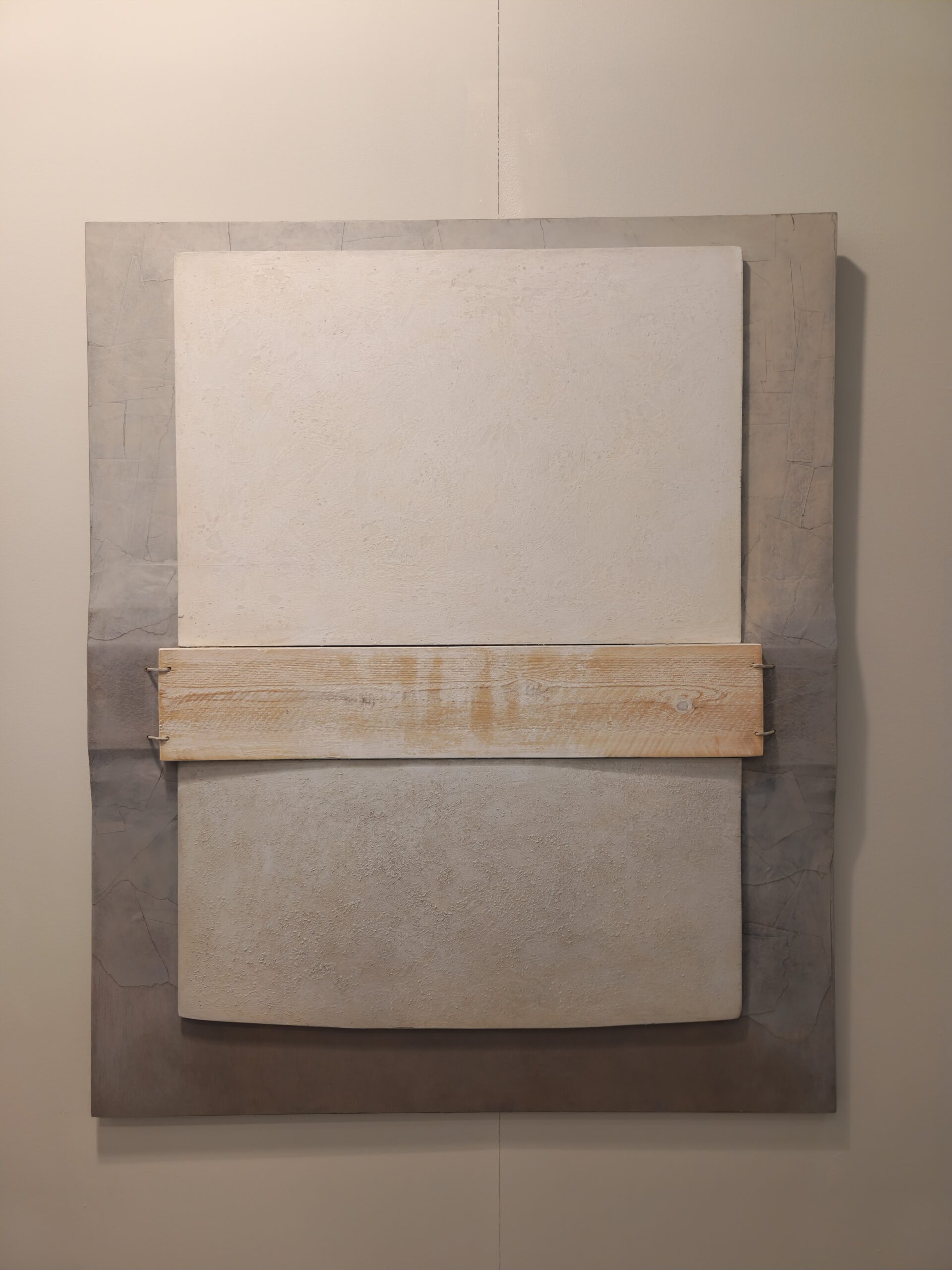
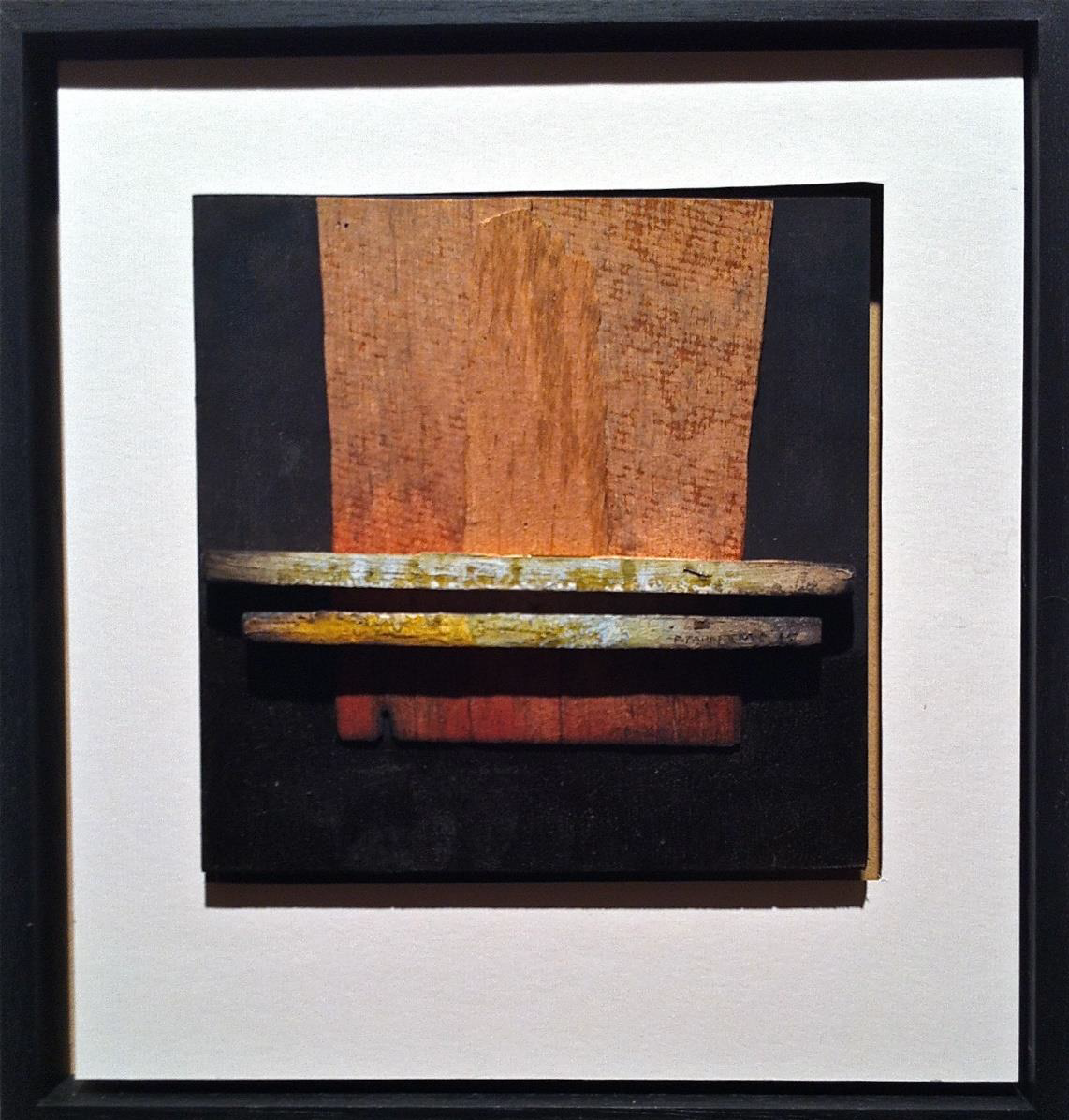
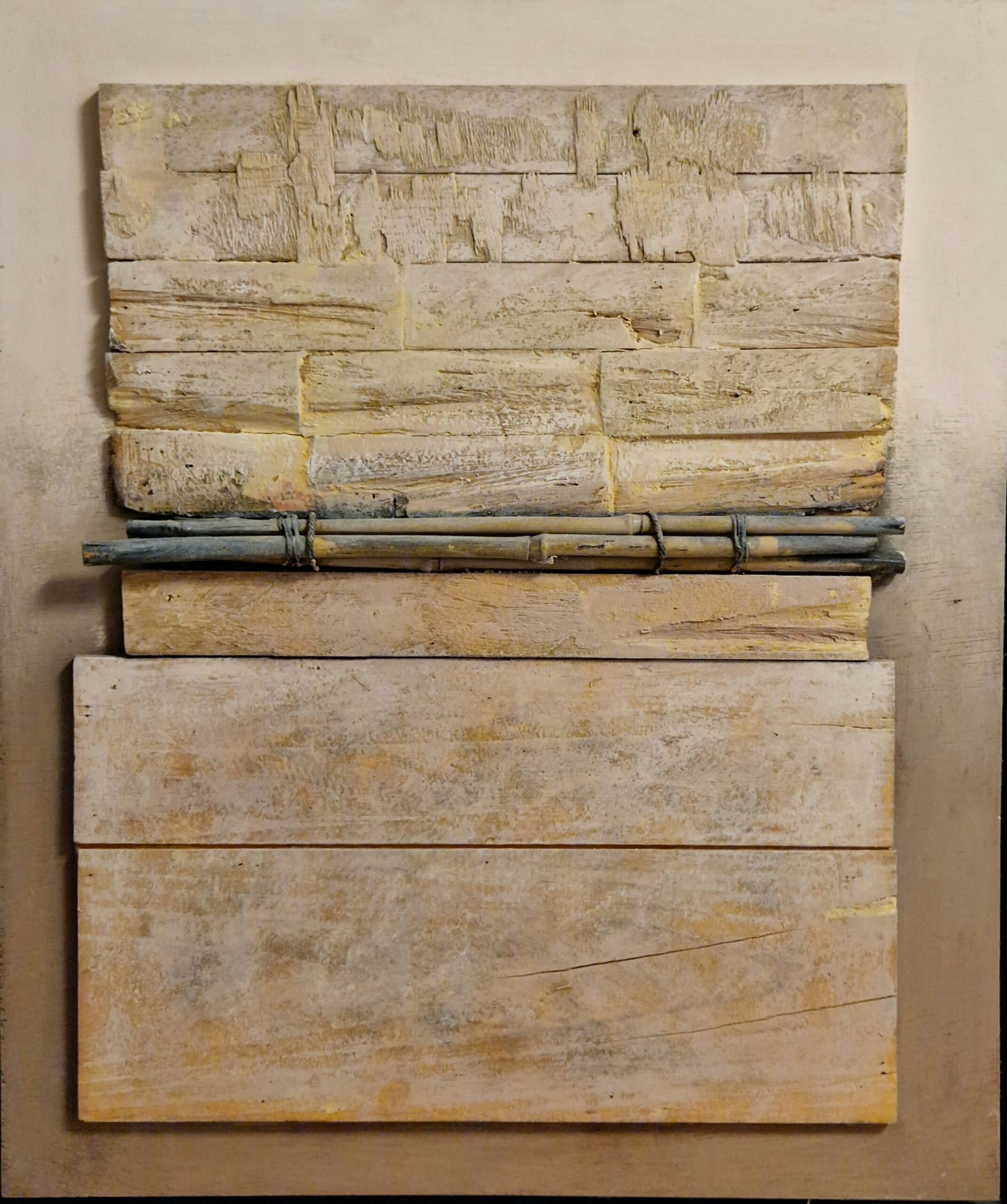
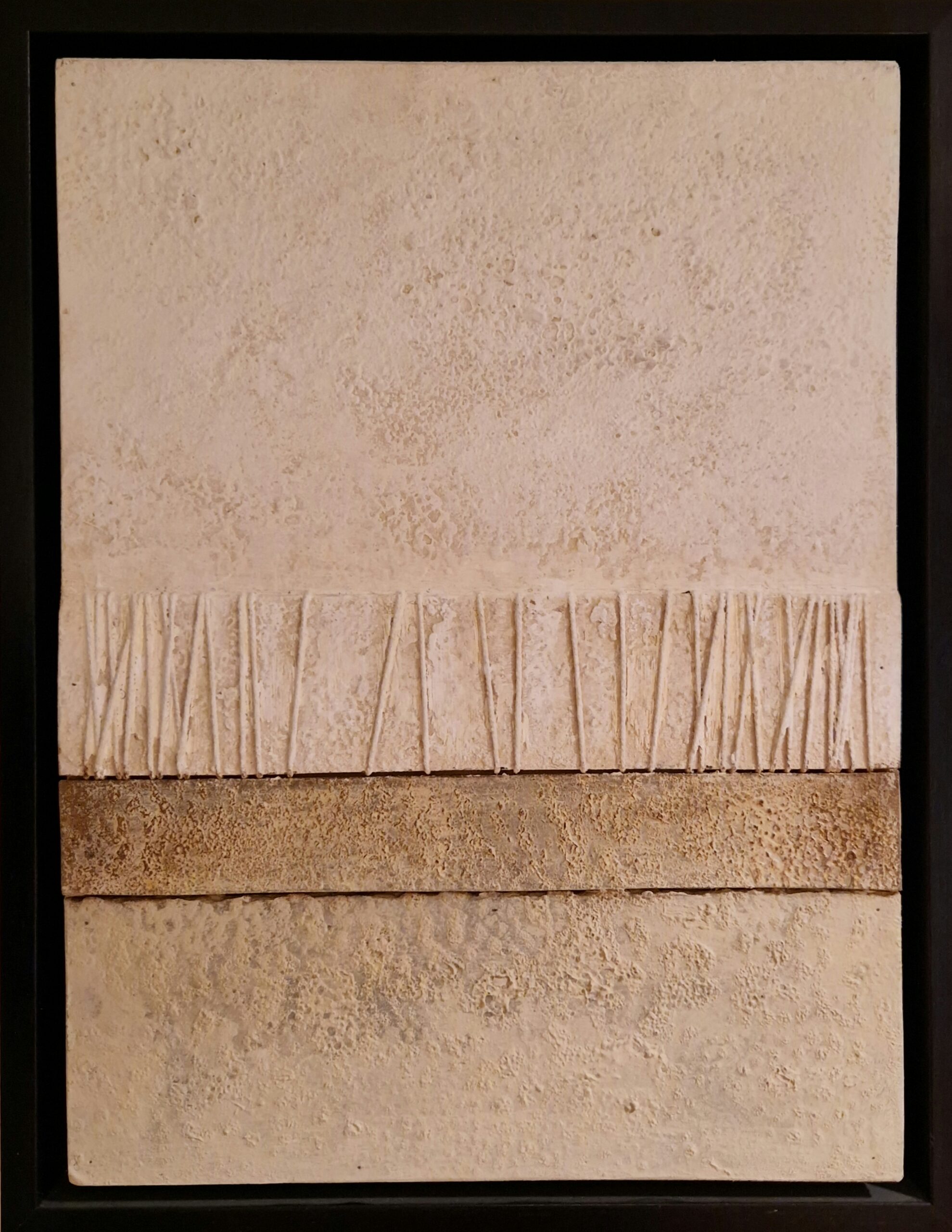
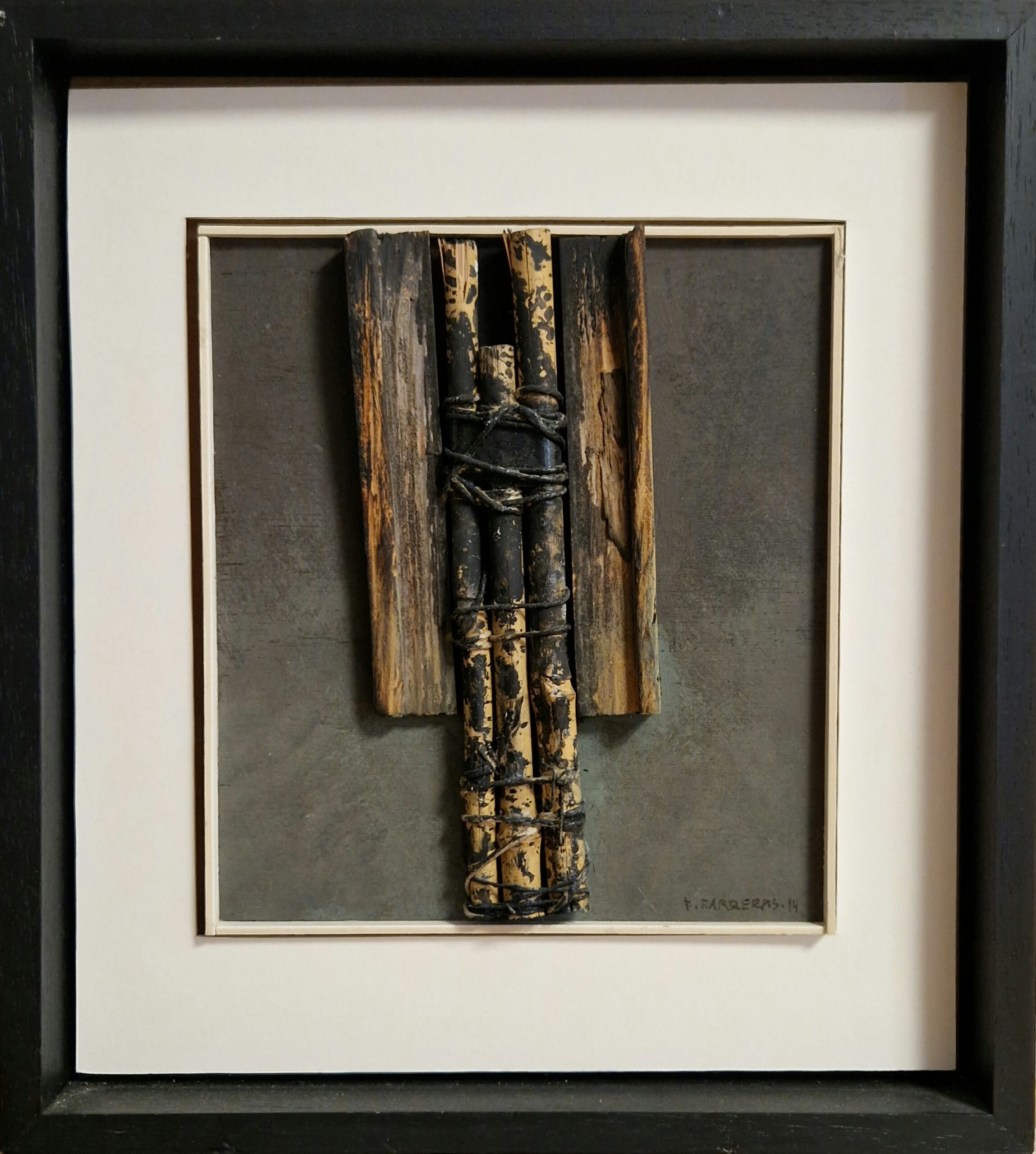
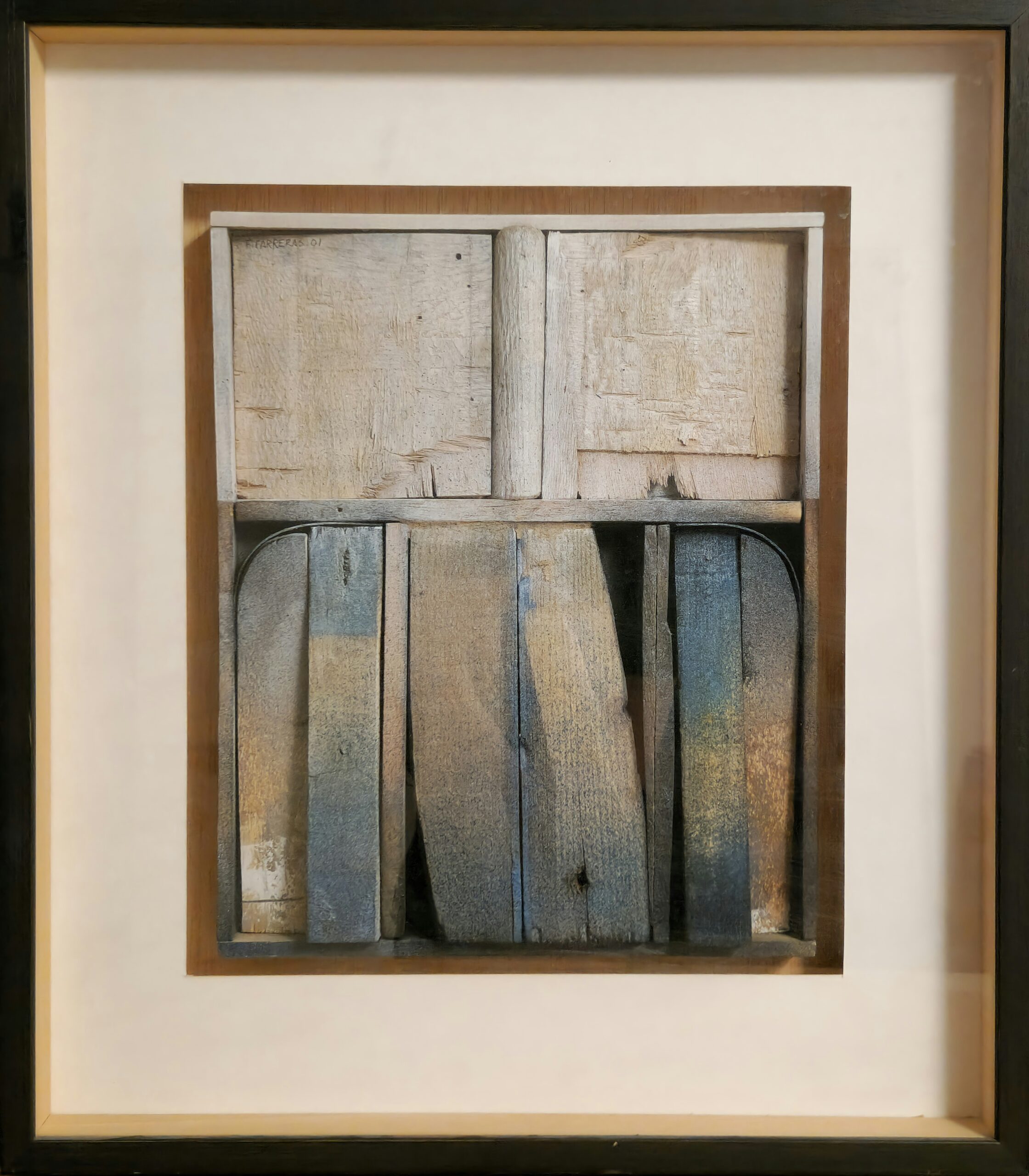
Following this project, he gradually moved away from flat surfaces and began exploring more volumetric forms, leading to the creation of the coudrages: plywood structures filled with foam rubber and covered with sewn fabric, which served as a precursor to his first wooden reliefs. From 1988 onward, he focused primarily on this technique and support, completing numerous large-scale public commissions. This activity was complemented by his regular participation in international art fairs such as those in Chicago, Cologne, and Frankfurt.

Not available

Not available
Available
Available
Available
Available
Available
Available